
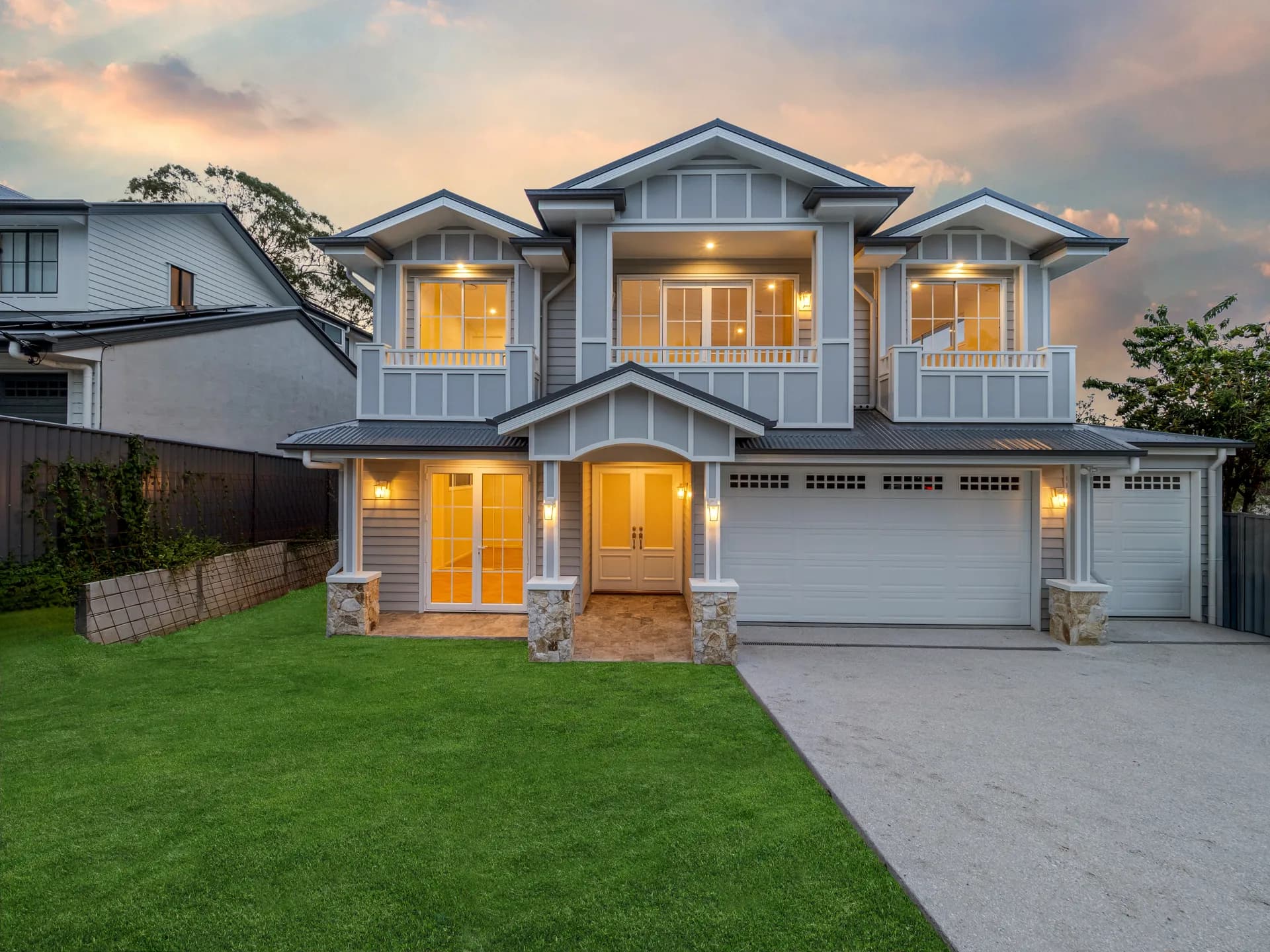
Building in Queensland becomes much easier when you know the sequence and decisions at each stage. This guide is designed for homeowners who want a clear roadmap before committing.
Step 1: Confirm Your Block and Feasibility
Before design, confirm what is actually possible on your land.
- Check overlays, easements, and frontage constraints.
- Review slope, soil test reports, and stormwater considerations such as discharge points.
- Check for acoustic, BAL rating, and covenant requirements.
- Understand orientation for light, heat, and natural ventilation.
- Discuss likely build envelope and setbacks.
A strong feasibility check saves redesign costs later.
Step 2: Define Brief, Budget, and Priorities
Your brief should connect daily life with budget.
- Number of bedrooms, bathrooms, and living zones.
- Multi-generational or work-from-home needs.
- Preferred facade style and finish level.
- Must-haves vs nice-to-haves.
At this stage, clarity matters more than detail perfection.
Step 3: Concept Design and Preliminary Pricing
Design begins with space planning, flow, and site response.
- Concept plans and facade direction are developed.
- Preliminary pricing checks whether scope aligns with budget.
- Layout adjustments happen before documentation progresses too far.
Early pricing feedback prevents expensive late changes.
Step 4: Working Drawings, Engineering, and Selections
Once concept direction is approved, documentation deepens.
- Working drawings and engineering details are prepared.
- Key inclusions and finishes are selected.
- Kitchen, wet areas, flooring, and electrical intent are clarified.
The more resolved your selections, the fewer surprises in contract stage.
Step 5: Approvals and Certifications
Queensland projects usually require coordinated approvals from multiple authorities and consultants.
- Building approval through a certifier and council process.
- Plumbing approval from the relevant authority.
- Energy efficiency and compliance approvals.
- Covenant approval from the developer where applicable.
Approval timing varies by project complexity and local conditions.
Step 6: Contract Finalisation
This is where risk is either reduced or created.
- Review inclusions, exclusions, and specifications line by line.
- Understand allowances, provisional sums, and variation mechanics.
- Confirm progress claim stages and communication protocol.
A transparent contract protects both homeowner and builder.
Step 7: Construction Stage
Typical sequence includes:
1. Site preparation and slab/foundations.
2. Frame, wall framing, subfloor, and trusses.
3. Roof structure.
4. Services rough-in (electrical, plumbing, HVAC as applicable).
5. Lock-up stage (windows, doors, external envelope).
6. Internal linings, waterproofing, cabinetry, tiling, and fit-off.
7. Final finishes, practical completion checks, and rectification if required.
Regular site updates and documented decision logs keep everyone aligned.
Step 8: Handover and Defects Period
At completion:
- Conduct a detailed walkthrough.
- Confirm warranties and manuals are handed over.
- Record any minor defects and close them out formally.
A structured handover process improves long-term satisfaction.
Step 9: Post-Handover Planning
Good owners plan for ongoing performance.
- Schedule seasonal maintenance checks.
- Keep records of paint codes, products, and fixtures.
- Monitor drainage and external elements in heavy weather conditions.
Final Word
Building projects run best when decisions are made in the right order. A disciplined process reduces stress, protects budget, and improves delivery quality.
If you are planning your next build, talk to ARC Builders for a practical, step-based planning discussion.